
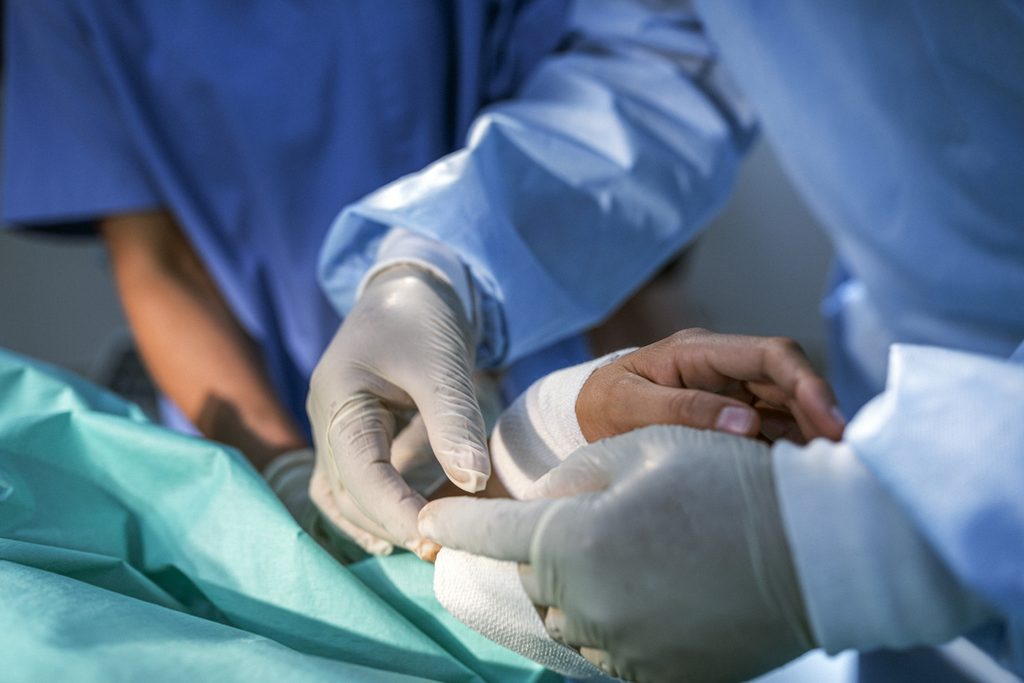
Hand pain, numbness, stiffness or restricted movement can have a significant impact on everyday life. Simple activities such as writing, driving, working, exercising or gripping objects can become more difficult when a hand condition affects movement or sensation.
At Cathedral Dermatology, our Consultant Plastic Surgeons provide specialist hand surgery in Belfast for a range of common conditions, including trigger finger, carpal tunnel syndrome and Dupuytren’s contracture. Treatment is tailored to your symptoms, diagnosis and how your condition is affecting your hand function.
Importantly, surgery is not always the first or only option. A thorough consultation allows your surgeon to assess your symptoms, discuss appropriate treatments and explain whether surgery may be suitable. For patients who do require an operation, recovery and rehabilitation are also important parts of the treatment journey.
With the introduction of our dedicated hand therapy service, patients can also access specialist support with hand surgery recovery and pain management, either as a standalone service or alongside surgical care.
What Is Hand Surgery?
Hand surgery encompasses procedures used to treat conditions affecting the fingers, thumb, hand and wrist. Depending on the condition, surgery may be recommended to relieve pressure on a nerve, release a tendon or remove thickened tissue that is restricting movement.
At Cathedral Dermatology, our Consultant Plastic Surgeons perform the hand procedures we offer under local anaesthetic as day-case procedures. This means the area being treated is numbed during the operation, and patients can generally return home following treatment once their clinical team is satisfied that they are ready for discharge.
The type of procedure required depends on your individual diagnosis. Three of the conditions treated through our hand surgery in Belfast service are trigger finger, carpal tunnel syndrome and Dupuytren’s contracture.
Conditions Treated Through Hand Surgery Belfast
Trigger Finger
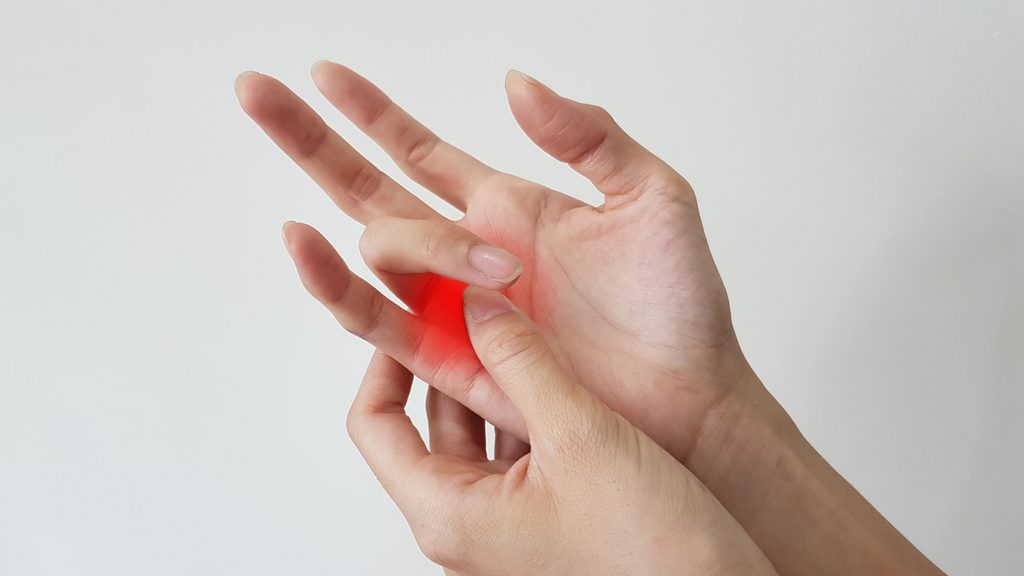
Trigger finger affects one or more fingers or the thumb and can cause painful or restricted movement. You may notice clicking or catching when bending or straightening the affected digit, while some people experience stiffness or difficulty fully straightening the finger.
The condition occurs when a flexor tendon does not glide smoothly through the surrounding pulley system. Thickening or swelling around the tendon and surrounding structures can interfere with its normal movement.
Symptoms may include:
- Clicking or catching when moving the finger or thumb
- Pain or tenderness at the base of the affected digit
- Stiffness, particularly in the morning
- A small lump or tender area in the palm
- Difficulty fully straightening the finger or thumb
- The digit becoming locked in a bent position
If symptoms persist, significantly interfere with everyday activities or the finger becomes locked, surgical treatment may be considered.
Trigger Finger Release
Trigger finger release is designed to allow the affected tendon to move more freely.
During the procedure, the surgeon makes a small incision in the palm near the base of the affected finger or thumb. The tight section of the tendon pulley system is carefully released, creating more space for the tendon to glide normally.
The skin is then closed with stitches and a dressing is applied.
As part of your recovery following hand surgery in Belfast, you will generally be encouraged to begin gentle movement of the finger or thumb within the limits advised by your surgeon. Some soreness, swelling or tenderness around the wound is expected during the early stages of recovery.
Your surgeon will provide specific advice about wound care, activity and when you can return to normal use of your hand.
Carpal Tunnel Syndrome
Carpal tunnel syndrome develops when the median nerve becomes compressed as it passes through the carpal tunnel in the wrist.
The median nerve provides sensation to parts of the hand and also contributes to movement of the thumb. Compression can therefore cause symptoms including:
- Numbness or tingling in the hand or fingers
- Pins and needles, particularly affecting the thumb, index and middle fingers
- Pain or discomfort in the hand or wrist
- Symptoms that may be worse at night
- Weakness or difficulty gripping
- A tendency to drop objects
- Reduced sensation or weakness in more established cases
Symptoms can develop gradually and vary between individuals.

Carpal Tunnel Decompression
Carpal tunnel decompression is a procedure designed to relieve pressure on the median nerve.
The carpal tunnel is formed by the wrist bones and a strong ligament that forms its roof. During surgery, the surgeon releases this ligament to increase the available space within the tunnel and reduce pressure on the nerve.
At Cathedral Dermatology, carpal tunnel decompression is performed under local anaesthetic as a day case.
Following hand surgery in Belfast, your hand may feel sore or swollen. Keeping the hand elevated and gently moving the fingers, as advised by your surgical team, can help with swelling and stiffness.
Improvement varies between patients. Tingling and pain may improve following decompression, while recovery of sensation can take longer, particularly when the nerve has been compressed for a prolonged period or symptoms have been more severe.
Dupuytren’s Contracture and Hand Surgery Belfast
Dupuytren’s contracture, also known as Dupuytren’s disease, affects the connective tissue beneath the skin of the palm and fingers.
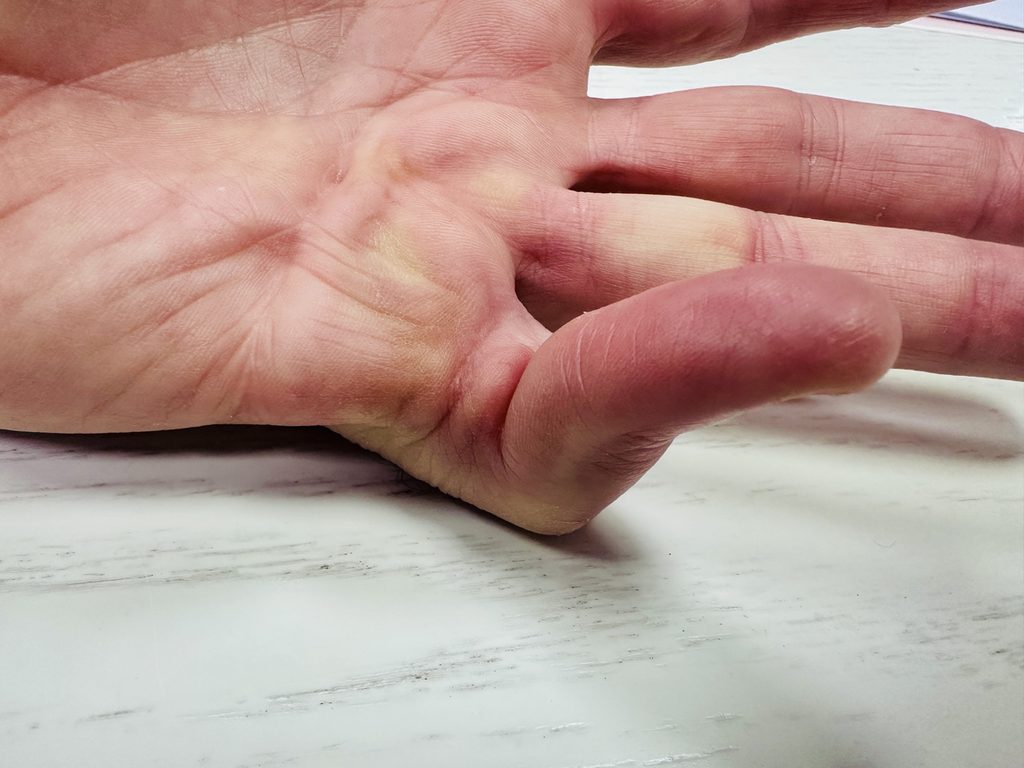
The tissue can gradually thicken and develop into cords or bands. As these tighten, they can pull one or more fingers towards the palm, making them increasingly difficult to straighten.
Dupuytren’s disease often develops gradually and is not necessarily painful. Early signs can include a lump, thickened area, ridge or dimple in the palm.
As the condition progresses, however, the contracture can interfere with hand function. You may find that you can no longer place your hand flat on a table, or that activities such as washing, putting on gloves or placing your hand into a pocket become more difficult.
Not everyone with Dupuytren’s disease requires treatment. Where the contracture is affecting hand function or the ability to straighten the fingers, surgery may be considered.
Dupuytren’s Fasciectomy
A Dupuytren’s fasciectomy involves removing affected thickened tissue from the palm and/or fingers to release the contracture and improve the ability of the affected finger or fingers to straighten.
The appropriate approach depends on the location and extent of the disease. Options offered include:
- Palm-only fasciectomy
- Single-digit fasciectomy
- Multiple-digit fasciectomy
- Limited fasciectomy
Your surgeon will discuss which approach is most appropriate for you following an assessment.
Dupuytren’s fasciectomy is performed under local anaesthetic as a day case at Cathedral Dermatology. Following surgery, the hand may be swollen, uncomfortable and stiff. Recovery depends on factors including the extent of the disease, the number of fingers treated and the degree of contracture before surgery.
It is important to understand that surgery treats the contracture but does not cure Dupuytren’s disease itself. The condition can recur following treatment, either in the same area or elsewhere in the hand.
Why Is Recovery Important After Hand Surgery?
Having hand surgery in Belfast is only one part of the treatment process. Appropriate aftercare and rehabilitation can also be important for restoring movement and supporting hand function.
Following surgery, your surgical team will provide advice about wound care, movement, activity and recovery. You will also be advised when it is appropriate to gradually return to activities such as driving, work, exercise and heavier use of the hand.
Recovery is different for every patient. It depends on the procedure performed, the extent of treatment and your individual circumstances.
For some patients, appropriate movement and exercises will be sufficient. Others may benefit from additional specialist hand therapy during their recovery.
Introducing Hand Therapy at Cathedral Dermatology
Our new hand therapy service provides personalised assessment and treatment for patients with hand problems and those recovering from hand surgery.
The service is led by Leann Gibson, an Occupational Therapist who has specialised in hand therapy for 25 years. Her experience spans orthopaedics, rheumatology and plastic surgery, with a focus on helping patients restore function and support their quality of life.
Her specialist areas include hand surgery recovery and pain management.
The service can be used as a standalone treatment or alongside hand surgery in Belfast with our Consultant Plastic Surgeons. This means that where therapy is appropriate, it can form part of a coordinated approach to your care.
A consultation provides an opportunity to assess your individual needs and determine what treatment or support may be most appropriate.
Hand Therapy for Hand Surgery Recovery
Recovery after hand surgery can involve swelling, stiffness, discomfort and temporary changes in movement. The appropriate exercises, movement and rehabilitation will depend on the procedure you have undergone and your individual recovery.
Hand therapy can form part of this process where appropriate, helping to support movement and functional recovery.
This may be particularly relevant following procedures where restoring finger movement is an important part of recovery, such as treatment for Dupuytren’s contracture.
Not every patient will require formal hand therapy. Your surgeon or therapist can advise whether additional support would be appropriate for you.
Hand Therapy and Pain Management
Hand problems can affect more than physical movement. Ongoing pain or discomfort can make everyday activities more challenging and may affect how you use the hand.
Our hand therapy service also focuses on pain management, alongside supporting function and recovery.
The aim is to understand how your symptoms are affecting you and provide an individualised approach based on your needs rather than applying the same treatment to every patient.
What Happens During a Hand Surgery Consultation?
The first step to hand surgery in Belfast is a comprehensive consultation with one of our Consultant Plastic Surgeons.
Your surgeon will ask about your symptoms, how they affect your everyday activities, your medical history and any previous treatments. They will examine your hand and discuss the available treatment options with you.
Importantly, not every hand condition requires surgery.
Where appropriate, your surgeon will explain whether an operation is suitable and whether other treatment options may be available. If surgery is recommended, you will have the opportunity to discuss the procedure, expected recovery and potential risks before making a decision.
Your treatment plan will take into account your diagnosis, symptoms, functional requirements and overall health.
A Coordinated Approach to Hand Surgery and Therapy
One of the benefits of having surgical and therapy services available within the same specialist clinic is the opportunity to consider different aspects of care together.
At Cathedral Dermatology, our Consultant Plastic Surgeons provide surgical assessment and treatment, while our dedicated hand therapy service provides specialist support with recovery and pain management where appropriate.
This does not mean every patient will need both services. Instead, your treatment can be tailored according to your individual circumstances.
For someone considering hand surgery in Belfast, this provides an opportunity to discuss both the surgical treatment itself and what support may be appropriate during recovery.
How Much Does Hand Therapy Cost?
Our dedicated hand therapy service is available as either a standalone service or alongside hand surgery.
Current appointment costs are:
New consultation: £150
Review appointment: £125
Your initial consultation will help establish your needs and the most appropriate approach to treatment.
Choosing Hand Surgery Belfast at Cathedral Dermatology
At Cathedral Dermatology, our approach to hand surgery in Belfast is centred around careful assessment, personalised treatment and appropriate aftercare.
Our Consultant Plastic Surgeons have specialist training and experience across plastic and reconstructive surgery, with the clinic bringing dermatology and plastic surgery expertise together under one roof.
The hand surgery procedures offered at the clinic are performed under local anaesthetic as day cases, and patients receive personalised advice following their procedure.
Where additional therapy is appropriate, our new hand therapy service provides access to Leann Gibson’s 25 years of experience in hand therapy, with a focus on hand surgery recovery and pain management.
Most importantly, treatment begins with understanding your individual symptoms and how they are affecting your life.
Book a Hand Surgery Consultation in Belfast
If hand pain, numbness, stiffness, catching or restricted movement is affecting your everyday activities, a consultation can help establish the cause of your symptoms and whether treatment may be appropriate.
Whether you are experiencing symptoms associated with trigger finger, carpal tunnel syndrome or Dupuytren’s contracture, our Consultant Plastic Surgeons can assess your condition and discuss the available options.
If surgery is appropriate, you will receive information about the procedure, recovery and potential risks. Where hand therapy may form part of your recovery, this can also be considered as part of your personalised care.
To find out more about hand surgery in Belfast or our new hand therapy service, contact Cathedral Dermatology on 028 9032 2020 or book a consultation.
This information is intended as a general guide and does not replace an individual medical assessment. Your surgeon will discuss the most appropriate treatment and any potential risks with you based on your individual circumstances.